
Commercial Solar Fires in Bristol - What Causes Them
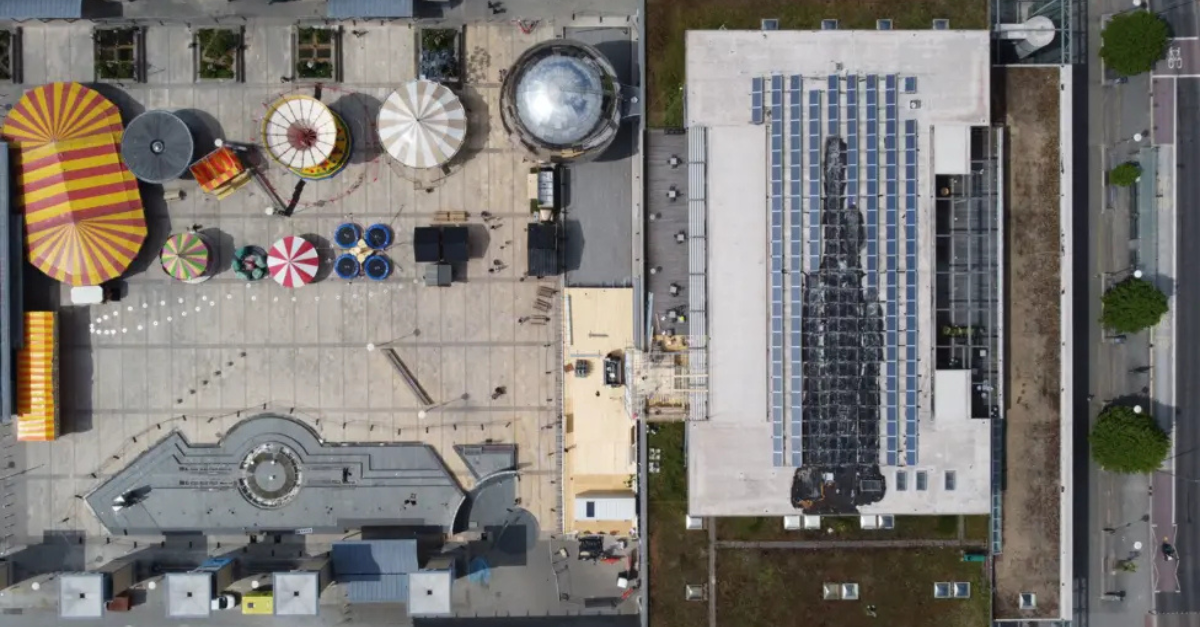
Solar Fire - We The Curious Bristol
Two Bristol fires, three years apart
On 9 April 2022, a bird damaged a solar panel on the roof of We The Curious. The panel faulted, the electrics followed, and the building was on fire within the hour. Fire crews got the flames out quickly, but the museum stayed closed for 27 months and only reopened in July 2024.
On 22 May 2025, a fault in the solar panels on the roof of St Michael's Hospital in Bristol triggered a fire that evacuated the maternity unit. Avon Fire and Rescue recorded the cause as accidental, traced to a fault in the solar panels.
Two of Bristol's best-known buildings, both with the same component at fault, both attended by the same fire service, three years apart.
The national picture
UK fire services recorded 171 solar-related fires in 2024, up from 107 in 2022. That works out at roughly one every two days, with 97 of them in people's homes. Installations in that same window grew 29.6%, so the fires are rising faster than the solar panels going up.
The insurance industry has started to push back. Major insurers are openly linking the rise in claims to workmanship on the original installs and the lack of any follow-up inspection afterwards, and flagging that the pace of rollout has outrun the safety and training side of the industry.
In December 2025, the Building Research Establishment launched a dedicated PV Fire Intelligence Network on the basis that the sector doesn't yet have a clear picture of how often these fires occur or what's causing them. When the body that sets fire testing standards admits the data is patchy, insurers and regulators tend to tighten scrutiny shortly after.
What's causing the fires
Quick bit of plain English before we get into it. A solar panel generates DC power (direct current), and your building runs on AC (alternating current). The job of the inverter is to convert one into the other. Worth knowing, because most solar fires don't start in the panel itself. They start somewhere on the DC side, before the power ever reaches the inverter.
These are the four causes we.
Inverters. The most common ignition source, especially when they've been crammed into a loft with no ventilation. The inverter gets hot, the loft gets hotter, and there's nowhere for the heat to go.
DC connectors and isolators. Loose, corroded, or the wrong specification for the system they're connected to. Each one is a small component, but a failed DC connection is a known arc-fault risk on any solar install.
Battery storage. Lithium battery systems can overheat and catch fire if something inside them fails, and they don't always stop burning once they start. Often it comes down to the battery being put somewhere it shouldn't be in the first place. Hallways, under stairs and next to escape routes all show up in fire reports.
Bird and debris damage. This is how the We The Curious fire started. Physical damage to a panel creates a fault, and the system doesn't cleanly isolate it. Once the fault sits there, the heat builds until something ignites.
Underneath all four of these sits the same pattern. The install wasn't perfect on day one, and nobody has looked at it since.
The inspection gap
If you run a commercial building in Bristol, your fixed electrics get an EICR every five years. Your fire alarm is tested weekly. Your emergency lighting is logged.
Your rooftop solar, on the other hand, probably hasn't been touched since the day it was signed off.
There is no mandatory periodic inspection regime for solar PV or battery storage in the UK. The 25-year warranty from the panel manufacturer covers power output. It doesn't cover whether your inverter is safe, or whether your DC connections have corroded. Nobody has been back to check the DC side since the day it went on.
What changes in October 2026
From 15 October 2026, every new solar install in the UK has to meet a tighter set of rules under BS 7671 Amendment 4, covering battery locations, fire risk, and inspection standards. The bar is going up for anything fitted from that date. But it doesn't force anyone to look at existing solar. If your solar went on the roof five years ago, nothing legally compels you to have it checked.
What to do before the next one
If you own or manage a commercial building in Bristol with rooftop solar already installed, four quick checks are worth doing.
Find your last electrical inspection certificate for the PV side specifically. Not the building EICR, but the PV commissioning report and any condition report done since. If you can't find one, the likelihood is nobody has looked at it.
Ask who installed it, and whether they were MCS Approved at the time. Not every installer between 2015 and 2020 was, and that's where most of the workmanship issues now show up.
Book a PV condition inspection on the same cycle as your EICR. Every five years at a minimum. Every two to three years if the array sits over a kitchen, plant room or occupied floor.
Check where your inverter and any battery storage are sited. An unventilated loft or a location near an escape route is the first thing Amendment 4 would flag on a new install, and it's the first thing we'd flag on an old one.
Why we're writing about this
We're MCS Accredited for solar PV and NICEIC Approved for electrical work. That means the same qualified contractor can check the DC side (panels down to the inverter), the AC side (inverter into the building), the inverter itself, and any battery storage, all in one visit.
If you've got solar on a commercial roof in or around Bristol or Bath and you can't remember the last time anyone checked it, get in touch.